Foam. A humble material, yet, within its airy, spongy mass lies a world of hidden power. It’s the backbone of so many things we take for granted—mattresses, car interiors, protective packaging—yet, do we really understand its core strengths? Not just the fluffiness, but the ability to stretch, withstand force, and bounce back? In the world of foam, three essential traits—tensile strength, tear strength, and elongation—are the unsung heroes that dictate how well the material will endure in high-pressure environments. So, what do these terms mean, and why do they matter?
Let’s unpack this. Tensile strength, tear strength, and elongation. These aren’t just jargon thrown around in material science labs—they define how foam behaves under stress, how it reacts to forces, and ultimately, how long it will last before it breaks. In this article, we’re going to break these concepts down and untangle their complexities. We’ll explore how they interact, how they’re measured, and—most importantly—how they drive the decisions behind foam selection for a range of applications.
What Is Foam Strength and Flexibility, and Why Do They Matter?
If foam were a person, it would be the quiet one in the room, sitting in the corner, but you’d be mistaken to think it’s weak. Foam is like a paradox wrapped in a sponge. Its physical properties often mask its true power. We talk about foam’s strength and flexibility—two seemingly opposing characteristics. But tensile strength, tear strength, and elongation aren’t independent of one another; they are intricately interwoven.
Imagine a foam used in automotive seat cushions. You need it to resist pulling forces (that’s tensile strength), but you also need it to resist tears when pressure is applied (tear strength), and, of course, it needs to flex around the human body without rupturing (elongation). Seems simple, right? However, the interplay between these properties is what makes choosing the right foam a challenge. Understanding these fundamental qualities isn’t just about reading numbers; it’s about knowing how they affect real-world applications. And let’s be honest, misconceptions about how they all fit together are abundant.
What Is Foam Tensile Strength?
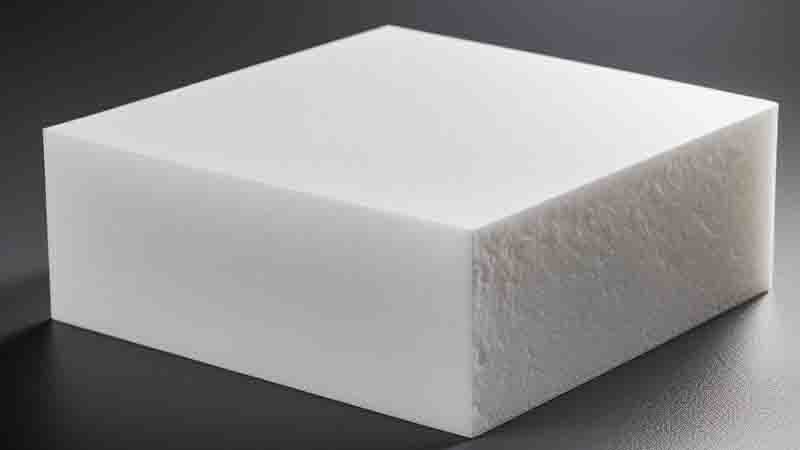
Let’s talk about tensile strength. This is the big one. When people talk about a foam’s strength, this is usually what they’re referring to. Tensile strength measures the maximum force a foam can endure before it breaks under tension. Think of it as the foam’s resilience when pulled or stretched. If you’ve ever tried to pull apart a foam pad and had it snap, then you’ve witnessed tensile strength at work.
But here’s the kicker: tensile strength isn’t just about how much force it takes to rip the foam apart. It’s about understanding how foam will perform under stress. Whether you’re looking to protect fragile electronics in packaging or need foam to maintain its shape in automotive parts, knowing tensile strength is key.
Measurement? Simple enough. We use tools like a tensile testing machine to measure how much stress (usually in kPa or psi) foam can handle before it tears. The higher the tensile strength, the more force the foam can endure. For example, closed-cell PE foam used in automotive seating might have a tensile strength in the range of 150–250 kPa.
| Property | Tensile Strength |
|---|---|
| Definition | The maximum force foam can withstand before breaking when stretched. |
| Measurement | kPa or psi (stress units). |
| Typical Applications | Packaging, automotive, and cushioning. |
| Common Range | 150–250 kPa for durable foams. |
How to Measure Foam Tensile Strength?
So, how do we get these numbers? Here’s where it gets fun. Tensile strength is measured through a tensile test—a process that sounds technical but is actually quite straightforward. First, the foam is cut into a standardized sample (think rectangular or dog-bone shapes). Next, the sample is clamped into a tensile testing machine, which pulls at it until it tears apart. Simple, right? Well, here’s where it gets interesting: The force applied is measured and plotted on a stress-strain curve.
This curve shows the relationship between the force you apply to the foam and the amount it stretches. As the test progresses, the foam’s elasticity and ultimate tensile strength come into focus. It’s not just about how long it can stretch; it’s about how much force the foam can endure without failing.
For example, take closed-cell PE foam: during testing, it might break at 200 kPa, indicating a high resistance to pulling forces. But does this foam also tear easily? You’ll have to keep reading to find out.
What Is Foam Tear Strength?
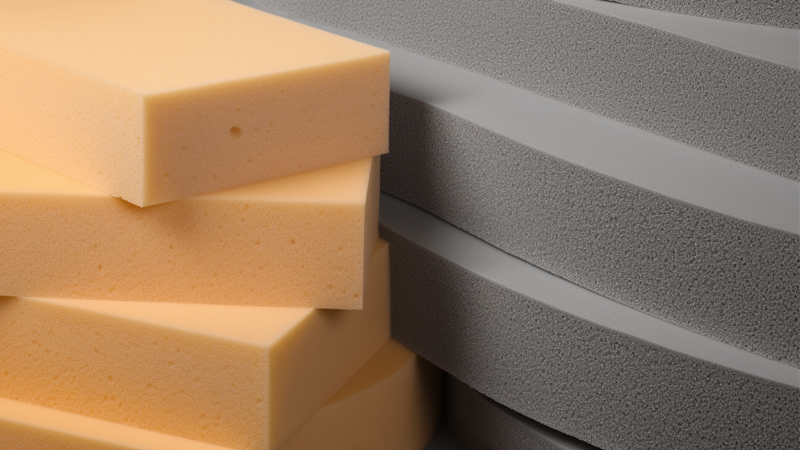
Tensile strength isn’t everything. Once you’ve stretched or punctured foam, it’s no longer about how much force it can resist pulling apart. The next question becomes: How easily does it tear once damaged? That’s where tear strength enters the stage.
Tear strength measures the force required to propagate a tear once it’s started. This is particularly important for foams exposed to wear and tear, like those used in athletic mats or protective packaging. A foam might resist stretching, but if it tears easily once punctured, it’s not suitable for high-impact applications.
Here’s the breakdown:
- Measurement: N/mm or lb/in, which measures the force required to spread a tear.
- Factors influencing tear strength: Foam’s density, cell structure, and material composition all come into play.
- Application: Think of athletic pads or automotive foam, where a tear-resistant foam is critical for long-lasting durability.
How to Measure Foam Tear Strength?
Tear strength isn’t rocket science—just a bit of precision. Start with a notched foam sample, which you’ll pull apart in a tensile tester to spread the tear. The amount of force required to propagate the tear is then measured.
Tear strength is calculated using the formula:
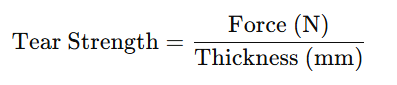
Let’s say you test high-density cross-linked PE foam—you find that it takes 3 N/mm to spread the tear, indicating it’s built to withstand damage. Pretty impressive, right?
| Property | Tear Strength |
|---|---|
| Definition | The force needed to continue a tear once initiated. |
| Measurement | N/mm or lb/in |
| Typical Applications | Protective packaging, mats, automotive. |
| Common Range | 2.0 N/mm for high-density foams. |
What Is Foam Elongation?
Elongation is the stretchiness of foam—the rubber band effect, if you will. It measures how much foam can stretch before breaking. If you’ve ever stretched a foam piece (think foam rubber or gaskets), you’ve felt elongation at work. A foam that can elongate without snapping is flexible, and in some applications, that’s exactly what you need.
Measurement: Elongation is expressed as a percentage, e.g., 150% elongation means the foam can stretch 1.5 times its original length before it snaps.
- Significance: This property is critical in applications requiring adaptability—like seals or gaskets.
- Applications: Anything that requires foam to conform to shapes or absorb impacts (cushioning, gaskets, impact-absorbing pads).
How to Measure Foam Elongation?
Measuring elongation is like the tensile test, but with a twist. Here’s the process:
- Stretch the Foam: Place the foam in the tensile tester.
- Measure the Change: As the foam stretches, measure the amount of elongation before it breaks.
- Calculate Elongation: Use this formula:

For example, if open-cell foam stretches to 200%, it’s highly flexible and ideal for cushioning applications.
| Property | Elongation |
|---|---|
| Definition | How far foam can stretch before it breaks. |
| Measurement | Percentage (%) |
| Typical Applications | Cushions, seals, gaskets. |
| Common Range | 150% for open-cell foams. |
What’s the Relationship Between Tensile Strength, Tear Strength, and Elongation?
Here’s the thing: these properties are a balancing act. It’s rare to find foam that excels in all three. A foam that has high tensile strength might not have tear strength, and vice versa. Elongation might come at the cost of both. So when choosing foam, you need to weigh what you prioritize.
How to Choose Foam Based on Strength Properties?
When it comes down to selecting the right foam, consider these factors:
- Tensile Strength: If it needs to resist stretching—go for high tensile.
- Tear Strength: If it needs to resist tearing under stress—go for high tear.
- Elongation: If flexibility is the priority—go for high elongation.
Example: Packaging needs both tensile and tear strength, while foam seals require high elongation.
Conclusion
Tensile strength, tear strength, and elongation. Three core properties define a foam’s potential. Understanding how to measure and apply these properties will guide you in choosing the right foam for your needs. Whether you’re protecting fragile items or cushioning a high-impact surface, these qualities will determine how well the foam performs.
Need help selecting foam for your project? Contact FS Foam for expert guidance on choosing the foam that’s perfectly tailored to your specific requirements.
FAQs
What’s the difference between tensile strength and tear strength?
Tensile strength is how much force foam can handle while stretching. Tear strength is how much force it takes to continue a tear once it’s started.
Why is elongation important for foam materials?
Elongation is crucial because it shows how flexible foam is, making it ideal for applications requiring stretchability without breaking.
How does foam density affect tensile and tear strength?
Higher density foams usually have better tensile and tear strength but may sacrifice flexibility in the process.
What applications require high tear strength?
Athletic mats, protective pads, and automotive foams all benefit from high tear strength to resist impact and wear.
Can one foam have high tensile strength, tear strength, and elongation?
It’s challenging, as these properties often conflict. A balanced foam will meet the needs of specific applications.