Automotive sound insulation is an important part of a vehicle’s comfort and performance, though it’s often overlooked.
Whether you want to block road noise, reduce engine vibrations, or stop the hum of your tires, picking the right foam for sound insulation is essential.
With different types of foam available—XPE, IXPP, and Polyurethane foam—it can be tricky to know which one is the best choice for your needs.
This guide’ll explain the different types of foam used for soundproofing in cars, their benefits, and where each foam works best.
By the end, you’ll know exactly how to choose the right foam for your vehicle.
Why is Sound Insulation Important in Cars?

Reducing Noise in Modern Cars
Today’s vehicles are designed to do much more than just take us from one place to another. People now expect their cars to be comfortable and quiet. Manufacturers focus on reducing noise inside the cabin to improve the driving experience. The level of Noise, Vibration, and Harshness (NVH) is now one of the main ways to measure a car’s quality.
Electric vehicles (EVs) are naturally quieter because they don’t have the noise from an engine. As a result, unwanted outside noises, like road noise, are easier to hear. This has made sound insulation even more important in modern cars.
How Sound Insulation Makes Driving More Comfortable?
Soundproofing isn’t just about making your car quieter—it also helps with comfort and safety. Too much noise can make a long drive stressful and tiring, especially if it’s loud or distracting. Reducing the noise inside the car helps keep the cabin peaceful, which helps the driver stay focused and less fatigued.
In addition, soundproofing materials also act as vibration dampers, which reduce stress on the car’s body and parts. This can lead to a smoother ride and help increase the lifespan of your car’s components.
What Types of Noise You Need to Block?
Before choosing the right foam, it’s important to understand the two main types of noise that soundproofing aims to block: airborne noise and structure-borne noise.
Airborne Noise vs. Structure-Borne Noise
- Airborne Noise: This type of noise comes from outside the car, such as wind noise, road noise, or even people talking outside. This noise travels through windows, doors, and vents. Airborne noise is usually high-pitched, and foam is good at absorbing this type of sound.
- Structure-Borne Noise: This noise comes from the car’s engine or moving parts, like the drivetrain. It’s felt as vibrations and low-frequency hums that travel through the car’s body. This type of noise is more difficult to block and requires foam that can absorb vibrations.
To block both airborne and structure-borne noise, the foam you choose must be good at absorbing sound and vibrations. Let’s take a look at the types of foam used in automotive sound insulation.
Why Foam is the Best Choice for Automotive Sound Insulation?
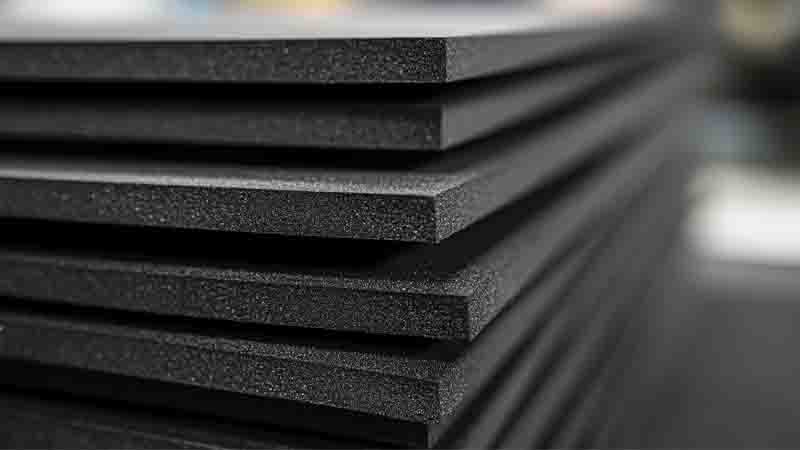
Foam is the best material for soundproofing cars because it is lightweight and can absorb and block sound waves. Foam has tiny pockets of air inside it, which help trap sound and keep it from traveling. It’s also durable, flexible, and can be shaped to fit various parts of the vehicle.
What Types of Foam Used in Automotive Sound Insulation?
Closed-Cell vs. Open-Cell Foam
Foam can be either closed-cell or open-cell, and this structure affects how well it absorbs or blocks sound:
- Closed-Cell Foam: This type of foam has tightly packed cells that don’t let air pass through. This makes it great at blocking sound and keeping out moisture. It is used in areas like engine compartments and wheel wells where soundproofing and moisture resistance are needed.
- Open-Cell Foam: This foam has more space between the cells, which allows air and sound waves to pass through.
What Types of Foams Used for Sound Insulation in Vehicles?
XPE Foam: Lightweight and Cost-Effective
XPE foam (cross-linked polyethylene foam) is one of the most popular materials for automotive soundproofing. It’s lightweight, durable, and affordable, with a closed-cell structure that makes it effective at blocking sound.
Why XPE Foam is Great for Cars?
XPE foam is lightweight, making it ideal for areas where you want to reduce weight, like floor mats and roof linings. It also resists moisture, making it good for areas that might get wet, such as the car floor.
Benefits of Using XPE Foam
- Affordable: XPE foam is cheaper than other foams, making it a good choice for budget-conscious projects.
- Waterproof: It resists moisture, so it’s perfect for areas like the floor.
- Thermal Insulation: XPE foam also helps to maintain a comfortable temperature inside the car.
When to Choose XPE Foam?
XPE foam is best for areas that need moderate soundproofing but don’t require extreme noise reduction. It works well in floor mats, roof linings, under carpets, and door panels.
IXPP Foam: Strong and Durable for Tough Areas

IXPP foam (cross-linked polypropylene foam) is more durable than XPE foam and works better in high-performance areas. It’s resistant to compression, moisture, and extreme temperatures.
Why IXPP Foam is Better for High-Performance Areas?
IXPP foam is a more durable version of cross-linked foam. It offers better soundproofing and can resist wear and tear, making it ideal for areas like engine compartments and wheel wells.
Benefits of IXPP Foam
- Highly durable: IXPP foam resists wear, compression, and moisture.
- Blocks both high and low-frequency noise.
- Lightweight but strong: Despite its durability, IXPP foam remains lightweight.
Best Uses for IXPP Foam
- Engine compartments: Blocks engine noise and resist heat.
- Wheel wells and underbody: Reduces road noise and vibration in high-performance vehicles.
- Car dashboard and door panels: It performs better than XPE.
Polyurethane Foam: Customizable and Flexible
Polyurethane foam, especially the open-cell variety, is highly customizable and great for areas that need specific soundproofing or vibration damping.
Why Polyurethane Foam is Special?
Polyurethane foam is good at absorbing sound, especially low-frequency noise, and is also great at damping vibrations. It’s ideal for custom applications and high-performance soundproofing.
Benefits of Polyurethane Foam
- Customizable: Can be shaped to fit specific parts of the vehicle.
- Effective vibration damping: Great for areas that need to reduce vibrations, such as door panels and engine bays.
When to Use Polyurethane Foam?
Polyurethane foam is perfect for custom soundproofing needs, especially in areas exposed to high vibrations or those that need tailored solutions.
Comparing XPE, IXPP, and Polyurethane Foam for Automotive Sound Insulation
| Feature | XPE Foam | IXPP Foam | Polyurethane Foam |
|---|---|---|---|
| Best For | General soundproofing | High-performance areas | Custom solutions and vibration damping |
| Sound Absorption | Good for moderate noise reduction | Excellent for both high and low-frequency noise | Excellent for absorbing low-frequency noise and vibration damping |
| Durability | Moderate, may wear in extreme conditions | High, resistant to wear and extreme conditions | Varies based on density; generally durable but needs moisture protection |
| Moisture Resistance | Very resistant to moisture | Excellent moisture resistance | Can absorb moisture unless treated |
| Heat Resistance | Performs well, but may degrade in extreme heat | Great heat resistance, ideal for high-temperature environments | Can be less effective in high heat unless specially treated |
| Weight | Lightweight | Lightweight but denser and stronger | Can be lightweight or dense depending on the type |
| Flexibility | Flexible and easy to install | Flexible, but more rigid than XPE | Highly flexible and customizable |
| Cost | Affordable, budget-friendly | More expensive | Mid-range, but cost varies with customization |
| Applications | Floor mats, door panels, roof linings | Engine compartments, wheel wells, underbody | Custom parts, door panels, headliners, vibration-sensitive areas |
| Vibration Damping | Moderate | Excellent | Excellent |
How to Choose the Right Foam on Your Vehicle?
To pick the right foam, consider:
- For General Soundproofing: If you want to reduce road noise and ambient sounds, XPE foam is affordable and works well for general areas like floor mats, roof linings, and door panels.
- For High-Performance Noise Blocking: For engine sounds or structure-borne noise, IXPP foam is best.
- For Custom Soundproofing: Polyurethane foam is perfect for areas that need vibration.
Conclusion

Choosing the right foam for sound insulation is an important decision that affects the comfort and performance of your car. Whether you choose XPE foam for general use, IXPP foam for high-performance areas, or polyurethane foam for custom applications, each type of foam has its benefits.
Consider your budget, the areas you need to insulate, and the type of noise you want to block. You can create a quieter, more comfortable driving experience with the right foam.
Still do not know how to pick the sound insulation foam in your car? Contact us and our expert would love to help.
FAQs
1. What’s the difference between XPE foam and IXPP foam?
XPE foam is lightweight and budget-friendly, while IXPP foam is more durable and offers better soundproofing, especially for high-performance areas like the engine compartment.
2. Which foam is best for reducing road noise?
For road noise, XPE foam is a good choice. For low-frequency engine noise, IXPP foam is more effective, especially in engine compartments and underbody areas.
3. Can I use polyurethane foam for custom parts in my car?
Yes, polyurethane foam is highly customizable and works well for creating tailored soundproofing solutions in areas like door panels, headliners, and engine bays.
4. How long will my soundproofing foam last?
The lifespan of foam depends on the type and where it’s installed. IXPP foam lasts the longest, especially in areas exposed to high heat and moisture, while XPE foam may wear out sooner in extreme conditions. Polyurethane foam can last a long time if treated properly.
5. How can I improve the soundproofing performance of my foam?
To get the best results, make sure to seal gaps and cut foam to fit tightly in your vehicle. Consider layering foams—use XPE foam for blocking sound and polyurethane foam for vibration damping to target both high and low-frequency noise effectively.