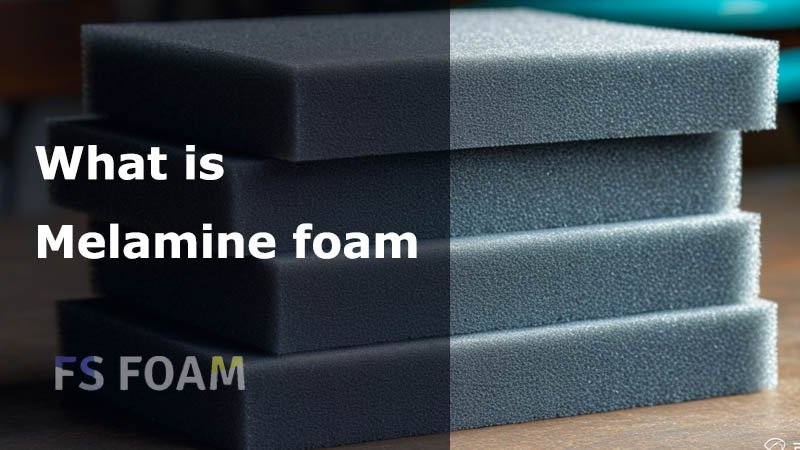
When people hear the phrase melamine foam, they often think of those magic white sponges that wipe away impossible stains with nothing more than water. But to us—manufacturers, engineers, and materials specialists—melamine foam is far more than a household cleaning trick. It’s a high-performance, thermoset, open-cell foam that has quietly reshaped multiple industries since the 1990s. And as we’ve worked with it, cut it, compressed it, and engineered it into a near-limitless range of functional components, we’ve come to appreciate just how unusual and surprisingly powerful this material really is.
In this guide, we’re pulling back the curtain.
We’ll explain what melamine foam is, how we make it, why it behaves the way it does, and where it’s used. Let’s get started.
What Is Melamine Foam?
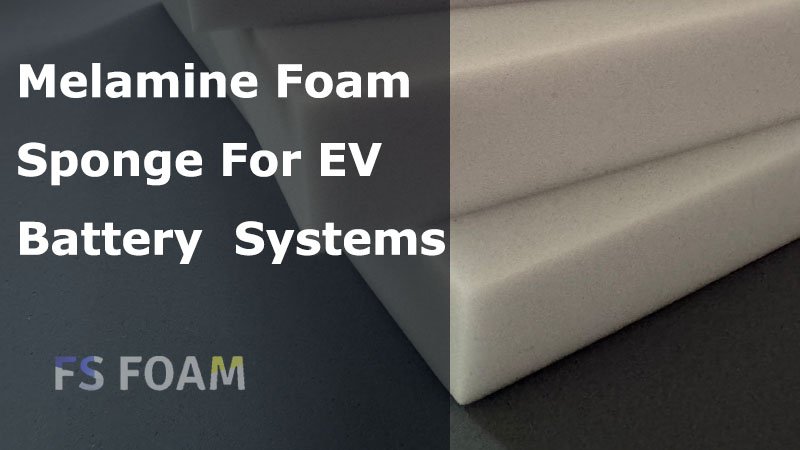
Melamine foam is, in essence, a lightweight, heat-resistant, open-cell thermoset foam derived from melamine resin. But that description barely scratches the surface. When we talk about melamine foam in our industry, we’re referring to a material that combines several high-value characteristics that rarely coexist in one product: fire resistance without additives, deep sound absorption, low density, abrasive cleaning ability, thermal insulation, and stability across extreme temperature ranges.
It’s a mouthful, but deservedly so.
Melamine foam was first successfully commercialized in the 1990s, during a period when engineers were actively searching for materials that could handle high heat, meet strict fire-safety standards, and remain lightweight enough for aerospace and transportation applications. Traditional foams—polyurethane, polyethylene, polystyrene, polyester fiber, and more—offered only fragments of what was needed. Some burned too easily; others released toxic fumes; still others lost structural integrity at high or low temperatures.
Then melamine resin entered the conversation.
Because melamine resin naturally contains a high nitrogen content and forms an incredibly stable cross-linked network, it can be transformed into a foam that behaves unlike any other polymeric foam on the market. The result is a material that does not melt when exposed to flame, that self-extinguishes, that chars instead of dripping, and that produces minimal smoke. At the same time, it absorbs sound waves with remarkable efficiency.
For us, working with melamine foam never feels like working with typical foam. It feels more like working with a hybrid between engineered ceramic and soft polymer—a material that is both delicate and strong, light yet resilient, airy but structurally complex.
How Is Melamine Foam Made?
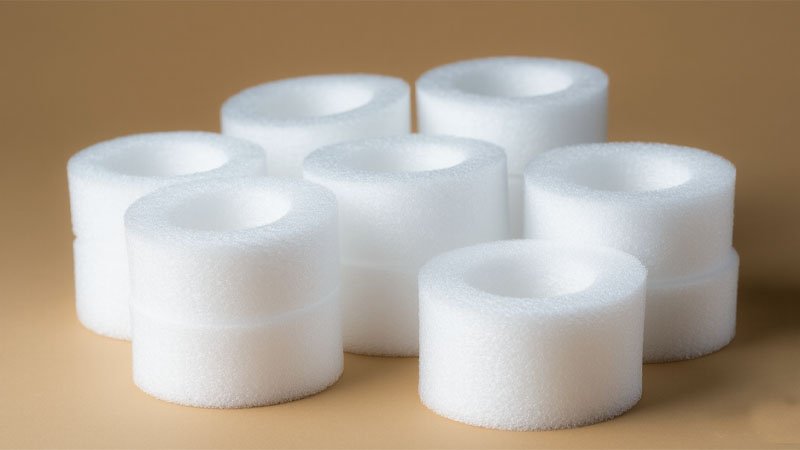
To appreciate melamine foam’s properties, you need to understand how it’s created. Let us walk you through the process from raw resin to functional foam.
1. It Starts With Melamine Resin
Melamine resin is a thermosetting polymer formed through the reaction of melamine and formaldehyde. When properly processed, this resin contains no residual free formaldehyde, making it both stable and hygienic—so safe, in fact, that the raw material can be used to make tableware.
This isn’t a soft polymer. When cured, melamine resin is hard, glass-like, chemically resistant, and naturally flame retardant. So the question becomes: how do we turn something that behaves like a rigid thermoset into a fluffy, three-dimensional foam?
2. Resin Foaming and Cross-Linking
This happens through a carefully controlled chemical foaming process. We introduce blowing agents and specific additives that cause the resin to expand while simultaneously cross-linking. Think of it as freezing a chemical reaction into a solid, ultra-porous structure at the exact moment when it has expanded into hundreds of thousands of micro-sized cells.
The three-dimensional network that forms is incredibly stable.
The foam becomes:
- Lightweight (as low as 7–9 kg/m³)
- Open-cell (almost like a microscopic honeycomb)
- Highly cross-linked (resistant to heat, cold, and chemicals)
- Thermoset (meaning it won’t melt at high temperatures)
And once this network is set, it can’t be melted, reshaped, or re-flowed—it’s truly thermoset.
3. Microwave Foaming Technology
In our facilities, we rely on industrial microwave foaming lines. This technology ensures the heat distributes uniformly through massive resin blocks, creating a consistent pore structure from edge to core.
We maintain exacting control over:
- Temperature
- Humidity
- Expansion rate
- Foaming time
- Resin concentration
Any fluctuation—even slightly—can create uneven cell sizes, hotspots, weak structures, or incomplete cross-linking. This is why melamine foam production isn’t something anyone can simply replicate; the equipment investment and process precision are intense.
4. Fabrication Into Functional Products
Once the foam block is cured, we shape it into final products using:
- Conventional cutting
- Slitting and skiving
- CNC contour cutting
- Die-cutting
- Laminating and compositing
- High-frequency compression molding
Melamine foam can also be bonded with aluminum foil, acoustic fabrics, pressure-sensitive adhesives, or thermal layers depending on end-use requirements.
We often tell customers: the melamine foam block is only the beginning; the real engineering happens during fabrication.
What Are the Features of Melamine Foam?
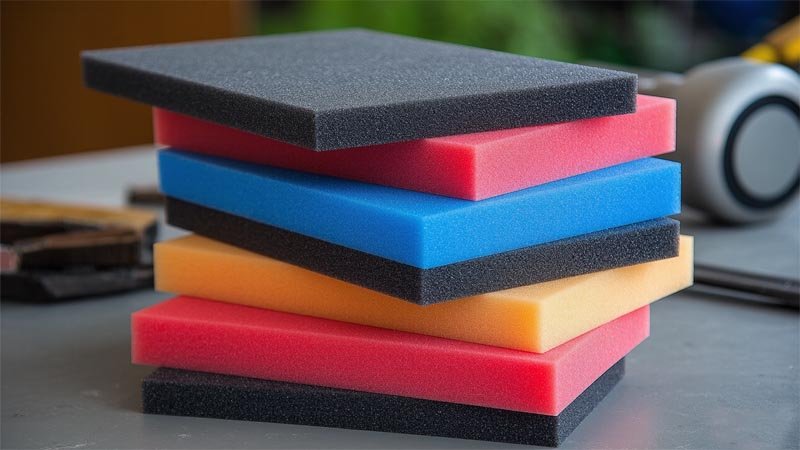
Melamine foam isn’t a “nice to have” material. It’s a highly engineered solution with measurable technical advantages. Below are the key features that make it invaluable across so many industries.
1. Superior Sound Absorption
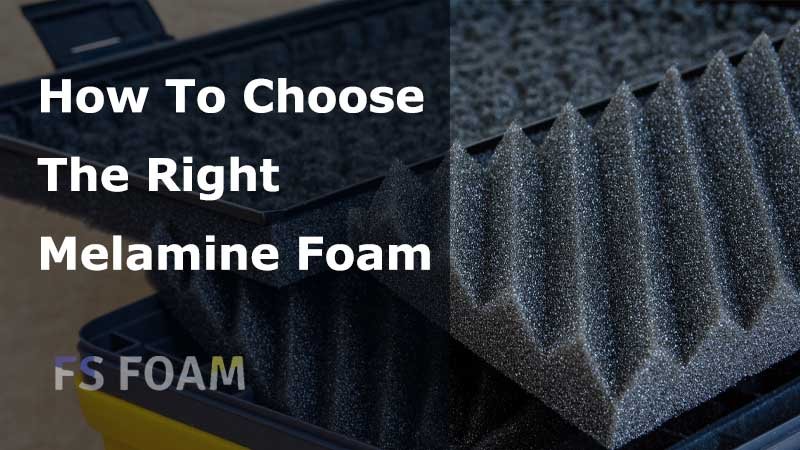
The open-cell structure of melamine foam works like a maze of microscopic sound traps. Sound waves enter these cells, lose energy, collide with internal surfaces, and dissipate as heat—long before they can reflect back into the environment.
We often enhance low-frequency performance by combining melamine foam with heavier layers or using patterned surfaces, creating acoustic systems that outperform many traditional insulation materials.
2. Exceptional Fire Resistance (Without Additives)
This is arguably melamine foam’s most important characteristic.
Because of its high nitrogen content, melamine foam meets some of the strictest fire-safety standards in Europe, the U.S., and Asia—without adding any flame retardants.
When exposed to flame:
- It does not melt.
- It does not drip.
- It does not spread fire.
- It produces very little smoke.
- It forms a stable char layer that protects the underlying material.
It achieves:
- DIN 4102- B1
- UL94-V0
- And several other international flame ratings
This makes it ideal for aerospace, railways, tunnels, public buildings, industrial machinery, and anywhere else where fire performance isn’t negotiable.
3. Thermal Insulation Performance
Because melamine foam’s pore structure is incredibly uniform, it offers excellent thermal insulation with a thermal conductivity of <0.035 W/(m·K).
What truly sets it apart is the temperature range:
- Flexible at –200°C
- Stable at +240°C
- Continuous working temperature: –180°C to +240°C
Few insulation materials can handle both cryogenic and high-heat conditions. Melamine foam can, which is why engineers rely on it for everything from LNG tanker insulation to hot-water systems and solar heaters.
4. Consistent Physical Performance Across Temperature Extremes
Unlike many foams that become brittle in the cold or soften in the heat, melamine foam maintains its structural properties. This stability allows it to perform in environments that swing between extreme conditions—aircraft cabins, engine compartments, outdoor enclosures, industrial pipelines, and more.
5. Chemical Resistance
The highly cross-linked melamine structure provides moderate resistance to many organic solvents. While strong acids and high-concentration alkalis require case-by-case evaluation, melamine foam generally performs far better chemically than most traditional foams.
6. Micro-Abrasive Cleaning Ability
This is the feature known to consumers everywhere.
Melamine foam is hard as glass at the polymer level, but because the structure is so porous, the foam feels soft in hand.
When moistened with water, the foam behaves like microscopic sandpaper:
- It slides smoothly
- Removes dirt mechanically
- Lifts stains without chemical cleaners
This is the principle behind melamine sponges, often called “magic erasers.” The cleaning effect is entirely due to micro-abrasion—not detergents.
What Are the Applications of Melamine Foam?
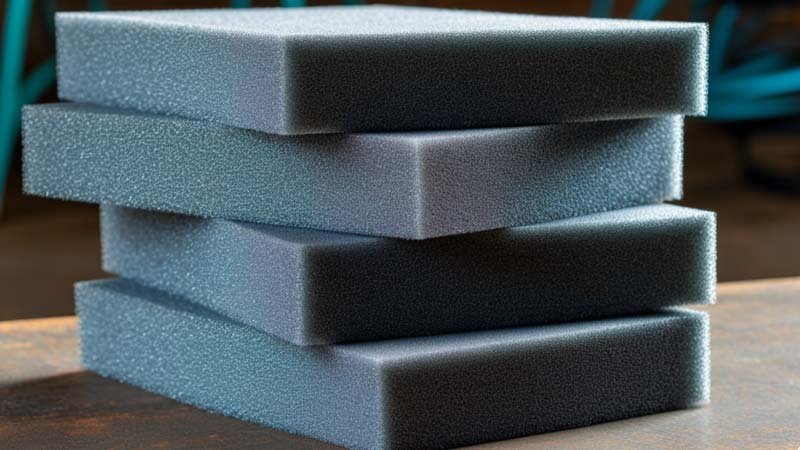
Because melamine foam combines acoustic absorption, fire resistance, thermal insulation, light weight, and hygiene, we see it used in an incredibly wide spectrum of industries. Some of the largest application categories include:
1. Aerospace and Aviation
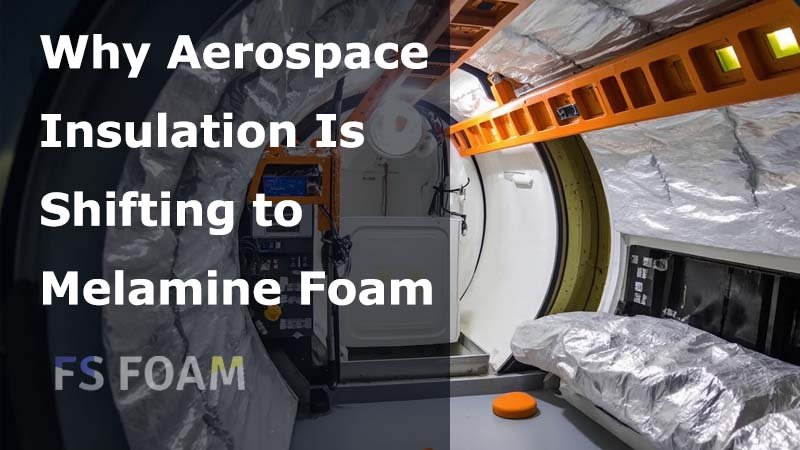
Aircraft rely heavily on materials that are flame-retardant, lightweight, and capable of reducing noise. Melamine foam provides acoustic lining, thermal insulation, and fire-safe padding for:
- Cabin walls
- Ducting
- Ceilings
- Engine compartments
- Floor panels
Its ultra-low density is a major advantage for weight-sensitive transportation systems.
2. Railways, Ships, and Vehicles
Transportation sectors benefit from melamine foam’s unique combination of safety and performance:
- Engine heat shields
- HVAC ducts
- Dashboard components
- Floor underlayment
- Vibration and noise damping
- Thermal insulation around pipes and equipment
3. Architectural Acoustics & Construction
Melamine foam has become a go-to solution for architects, builders, and engineers who need safe, lightweight acoustic materials.
You will find it in:
- Recording studios
- Theaters and cinemas
- School auditoriums
- Airport terminals
- Metro stations
- Tunnels
- Industrial workshops
- Indoor sports arenas
Fire safety in public buildings is critical, and melamine foam meets or exceeds those standards.
4. Industrial & Mechanical Applications
Industries use melamine foam for:
- Cryogenic tank insulation
- Hot water tanks
- Solar heating systems
- Machinery enclosures
- Compressor rooms
- Air purification units
- Ventilation systems
With its temperature resistance and acoustic dampening, melamine foam often replaces both fiberglass and polyurethane foams in modern engineering.
5. Household and Consumer Products
This is where most people encounter melamine foam:
- Melamine cleaning sponges
- Acoustic wall panels
- Home soundproofing
- Appliance insulation
- Decorative sound-absorbing tiles
Consumers love it for cleaning; designers love it for acoustic aesthetics.
Conclusion
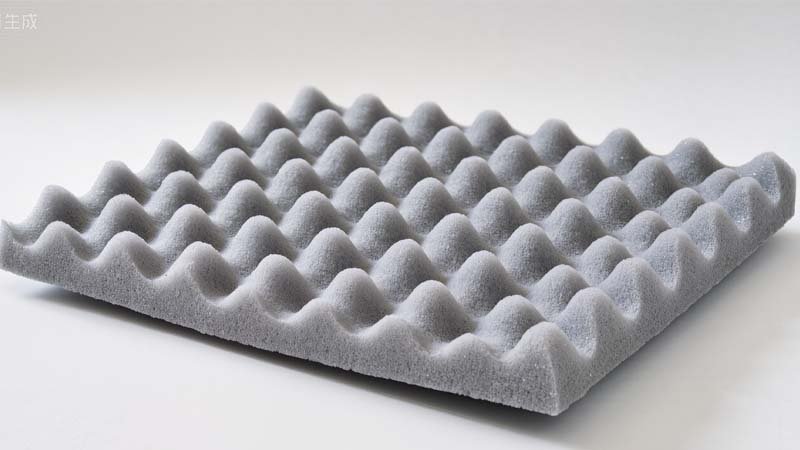
After decades of researching, producing, and engineering melamine foam, we can confidently say it’s one of the most versatile high-performance materials available today. Combining ultra-light weight with fire resistance, sound absorption, and stability across extreme temperatures, melamine foam solves problems that traditional foams simply cannot.
Our experience has shown us just how adaptable this material can be—from aerospace cabins to home cleaning sponges, from concert halls to industrial pipelines. As global industries continue demanding safer, lighter, and more efficient materials, melamine foam stands out as a solution ready for the future.
And we’re proud to be part of that future—engineering, shaping, and innovating with melamine foam in ways that push performance to new levels.
FAQ
1. Is melamine foam safe to use in homes and public buildings?
Yes. Melamine foam is inherently flame resistant, fiber-free, and contains no residual free formaldehyde. It does not melt, drip, or release toxic smoke when exposed to fire. These safety characteristics make it suitable for homes, schools, airports, theaters, vehicles, and other high-occupancy environments.
2. Why does melamine foam clean so effectively without chemicals?
Melamine foam has a micro-abrasive, glass-hard polymer structure. When dampened with water, the foam’s microscopic cells function like ultra-fine sandpaper, lifting dirt through gentle mechanical friction. This allows it to remove stains, scuffs, and built-up grime without detergents, making it effective for household and industrial cleaning.
3. Can melamine foam withstand extreme temperatures?
Yes. Melamine foam remains flexible at –200°C and stable at temperatures up to +240°C. This wide operating range makes it ideal for cryogenic insulation, engine compartments, HVAC systems, and high-temperature industrial environments where traditional foams soften, melt, or degrade.
4. How does melamine foam compare to polyurethane or polyethylene foam?
Unlike PU or PE foam, melamine foam is inherently flame resistant, fiber-free, and performs exceptionally in sound absorption and thermal insulation. It does not melt under fire and maintains stability across extreme temperatures. Although more brittle, its safety and performance advantages often outweigh this limitation in critical applications.
5. What industries benefit most from melamine foam?
Melamine foam is widely used in aerospace, railways, automotive manufacturing, construction, HVAC systems, industrial insulation, and consumer cleaning products. Its fire resistance, low weight, acoustic absorption, and temperature tolerance make it valuable in environments that demand high safety standards and reliable long-term performance.