Electric vehicles are advancing faster than any technology of our time, yet behind every milestone in range, charging power, and safety, one undeniable reality remains: temperature governs everything. As manufacturers push lithium-ion battery density to new extremes, thermal management has quietly become the invisible backbone of EV engineering. And as specialists in advanced foam materials, we’ve seen a surge in demand for thermal insulation materials that are not only effective but exceptionally lightweight, flame-resistant, and stable across a wide temperature spectrum.
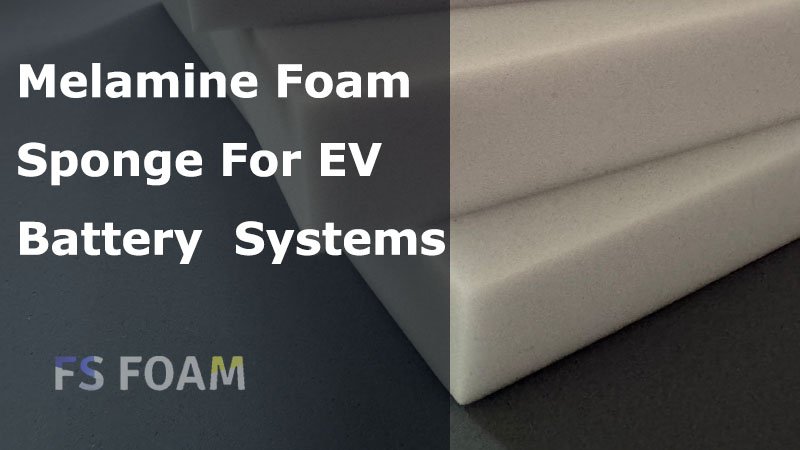
Among all the solutions tested across industries, melamine foam sponge is emerging as one of the most reliable materials for EV battery pack insulation. Its performance is remarkably consistent, and its physical structure gives engineers several advantages that traditional foams simply can’t match.
In this article, we break down why thermal insulation is becoming so crucial, the thermal challenges modern EV battery packs face, and why melamine foam sponge sits at the top of the material shortlist for OEMs and battery pack designers.
Why Is Thermal Insulation Becoming Increasingly Important in EV Battery Engineering?
EV battery packs are becoming denser, more compact, and more demanding. We’re no longer dealing with low-capacity packs sitting comfortably at room temperature. Instead, today’s packs:
- Push higher current flows
- Generate more internal heat
- Operate closer to thermal safety limits
- Must remain stable across sub-zero winters and scorching summers
As a result, thermal insulation is no longer a nice-to-have feature—it’s a core safety component.
Battery manufacturers want to achieve three things:
- Keep cells in their ideal operating temperature range
- Prevent heat from spreading from one cell module to another
- Buy time during a thermal runaway event
Melamine foam sponge addresses all three goals at once, and that is where its true value lies.
What Thermal Challenges Do EV Battery Packs Face?
We often describe EV batteries as “living systems.” That’s because lithium-ion cells continuously generate, absorb, and redistribute heat—all while being sensitive to the very temperature changes they create. This balancing act introduces several engineering challenges.
How Do Lithium-Ion Cells Generate Heat During Regular Operation?
Every lithium-ion cell produces heat naturally through:
- Electrochemical reactions
- Internal resistance
- High-current charging and discharging
- Fast-charging events
- Ambient temperature swings
- Mechanical stress within the pack
Even under perfectly normal conditions, the temperature inside a pack can rise rapidly. When the pack is tightly integrated—with modules stacked closely or wrapped inside a compact enclosure—heat has fewer escape routes. That’s where insulation begins to play both defensive and stabilizing roles.
Why Does Temperature Consistency Matter for Battery Life, Safety, and Performance?
We often tell clients this: lithium-ion cells hate temperature inconsistency.
If different cells in a pack have different temperatures, the effects can cascade:
- Uneven aging across modules
- Reduced charge acceptance
- Lower energy efficiency
- Shortened cycle life
- Higher internal resistance over time
- Increased risk of cell imbalance
Thermal gradients inside a battery pack can shorten the life of an EV by years.
Insulation doesn’t just keep heat out or slow heat transfer—it creates thermal uniformity, which significantly improves pack longevity.
What Role Does Insulation Play in Preventing or Slowing Thermal Propagation?
Every engineer fears the same two words:
thermal runaway.
If one cell overheats, it can trigger neighboring cells, which then trigger others—a chain reaction that can escalate rapidly.
Proper insulation helps in three critical ways:
- It slows heat transfer between modules, giving time for active cooling systems to intervene.
- It creates a protective buffer between cells, reducing the likelihood of heat jump.
- It acts as a fire-resistant barrier, limiting flame spread and buying precious time.
This is why materials used in EV battery packs must not only insulate heat but also resist flame, withstand high temperatures, and maintain structural stability during extreme events.
And this is exactly where melamine foam comes into the picture.
What Exactly Is Melamine Foam Sponge?
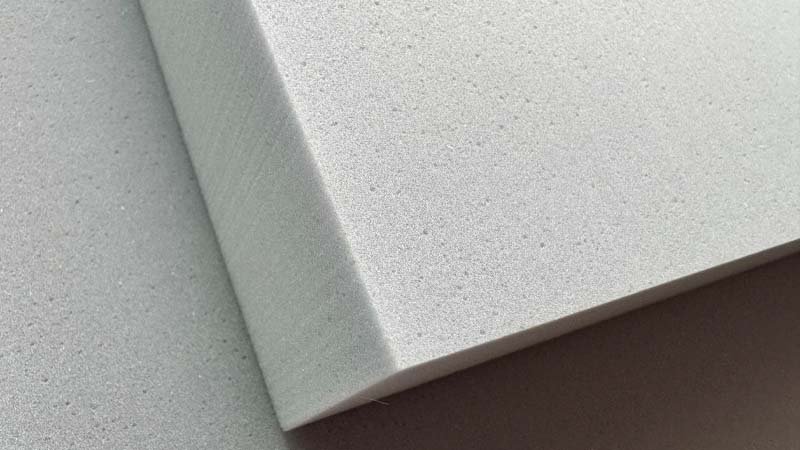
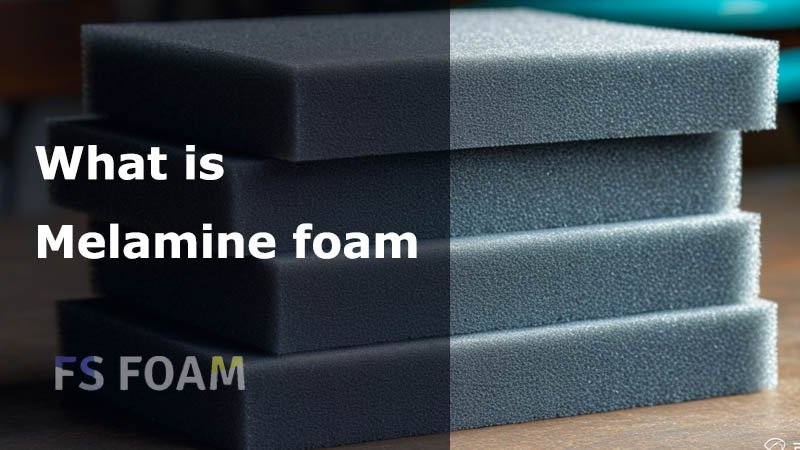
Melamine foam sponge is an open-cell, lightweight, thermoset foam made from melamine resin. Its micro-cellular structure creates excellent thermal insulation, flame resistance, and acoustic absorption. Because it’s inherently fire-resistant and maintains stability from –200°C to +200°C, it’s widely used in aerospace, automotive, and now EV battery engineering.
Why Melamine Foam Sponge Stands Out as the Optimal Thermal Insulation for EV Battery Systems?
When we evaluate materials for EV battery insulation, we measure performance across several critical metrics:
- thermal conductivity
- flame retardancy
- smoke toxicity
- weight
- compressibility
- durability
- temperature stability
- chemical resistance
Melamine foam scores exceptionally high across all categories—often outperforming polyurethane, EPDM, NBR, and even specialty polyethylene foams used in automotive parts.
Below are the key reasons it is becoming a top choice for EV battery systems worldwide.
1. Exceptional Insulation Performance With Ultra-Low Thermal Conductivity
Melamine foam’s labyrinth-like open-cell structure traps air and slows heat transfer dramatically.
It typically delivers thermal conductivity values lower than many standard polymer foams.
This translates to:
- better control of temperature rise during high-load operation
- more uniform temperature distribution across modules
- reduced load on the battery thermal management system (TMS)
In other words, it helps keep cells cool, consistent, and stable.
2. Inherent Flame Resistance Without Added Chemicals
One of melamine foam’s biggest advantages is that it is naturally flame-resistant.
The melamine resin contains a high nitrogen content, which means:
- no halogens
- no brominated flame-retardants
- no toxic chemical additives
- no dripping during burning
- minimal smoke generation
This makes melamine foam extremely attractive to battery OEMs seeking to meet or exceed safety standards such as:
- UL 94 V-0
- FMVSS 302
- DIN 5510
- EN 45545 (railway fire standards, but referenced for EV materials)
Its fire behavior is one of the cleanest among all foam materials.
3. Stability Across Extreme Temperature Ranges
EVs operate globally—from Arctic climates to desert temperatures.
Melamine foam stays structurally stable from –200°C to +200°C, which means it will not:
- melt
- deform
- shrink
- off-gas
- lose insulation capability
This stability is crucial for:
- fast-charging cycles
- high-current discharge events
- thermal runaway mitigation
- long-term durability over thousands of driving hours
Other foams simply cannot maintain performance across such a broad range.
4. Lightweight Structure Supporting EV Range Targets
Every gram inside an EV matters.
Melamine foam is incredibly lightweight due to its high air content and thin cell walls. Compared with many elastomeric foams:
- it can reduce insulation weight by 30–60%
- it provides more insulation per gram
- it supports OEM efforts to reduce overall vehicle mass and increase efficiency
For a battery pack containing several square meters of insulation, weight savings quickly add up.
5. Excellent Acoustic Dampening for Quieter EV Cabins
While the primary goal is thermal control, melamine foam also delivers acoustic benefits.
It dampens:
- battery vibration
- motor whine
- inverter noise
- road resonance
This dual-purpose performance helps simplify material selection and reduces the need for additional sound-absorbing layers.
6. High Compressibility and Precision Fit Inside Battery Enclosures
Battery packs are tightly engineered environments.
Insulation materials must:
- compress without losing their structural integrity
- fill gaps and irregular shapes
- avoid exerting pressure that could damage cells
- maintain long-term elasticity
Melamine foam compresses smoothly and rebounds without degrading, making it suitable for:
- module partitions
- pack liners
- gap fillers
- top covers
- thermal spacers
- flame-retardant padding
The foam can be precisely shaped using CNC cutting, die cutting, water-jet cutting, or lamination to match any custom geometry.
7. Chemical Resistance and Long-Term Aging Stability
Inside a battery pack, materials must withstand exposure to:
- electrolytes
- plasticizers
- oils
- moisture
- high-voltage electrical environments
Melamine foam’s thermoset nature gives it outstanding stability—it doesn’t crumble or break down, even after years of cycling.
This durability directly supports EV lifespan targets of 8–12 years, or even longer.
Conclusion
As EV battery engineering enters a new era of higher density, faster charging, and stricter safety regulations, the materials we choose matter more than ever. Thermal insulation is no longer simply a supporting component—it is a critical safety system in its own right.
Melamine foam sponge offers a rare combination of properties:
exceptional thermal insulation, inherent flame resistance, low weight, broad temperature stability, and long-term durability. These advantages make it one of the most reliable choices for EV battery pack insulation, especially in scenarios where safety margins, thermal uniformity, and fire behavior must meet the highest possible standards.
For engineers designing next-generation EV platforms, melamine foam isn’t just a material—it’s a strategic safety layer built into the heart of the battery.
FAQs
1. Is melamine foam sponge safe to use inside EV battery packs?
Yes. It’s inherently flame-resistant, produces very low smoke, contains no halogens, and maintains stability even under high heat, making it ideal for safety-critical applications.
2. Can melamine foam help prevent thermal runaway?
While no material can completely stop thermal runaway, melamine foam slows thermal propagation, giving active cooling systems and safety mechanisms more time to respond.
3. Does melamine foam add significant weight to the battery pack?
Not at all. It is extremely lightweight—often lighter than polyurethane, EPDM, NBR, or silicone foams. This supports EV range targets.
4. Can melamine foam withstand fast-charging heat spikes?
Yes. It remains stable from –200°C to +200°C, making it ideal for high-current charging environments.
5. Can melamine foam be customized into specific shapes or sizes?
With CNC cutting, die-cutting, water-jetting, and lamination capabilities, we can tailor the foam to fit any battery pack design exactly.