Choosing the right melamine foam can feel deceptively simple at first glance. After all, melamine foam looks light, soft, and almost weightless—how complicated could it possibly be? But as we’ve learned over years of manufacturing, engineering, shaping, and deploying melamine foam across industries, the real story is far more nuanced.
The truth is: the performance of melamine foam depends heavily on choosing the right grade, the right density, the right thickness, and the right structure for the right environment. Make the wrong choice, and the foam may crumble too quickly, fail to insulate properly, or fall short of safety requirements. Make the right choice, and you unlock one of the most versatile, fire-safe, acoustically capable, and thermally stable materials available today.
In this guide, we’re sharing everything we know—from formulation insights to field applications—so you can choose melamine foam with complete confidence.
What Exactly Is Melamine Foam?
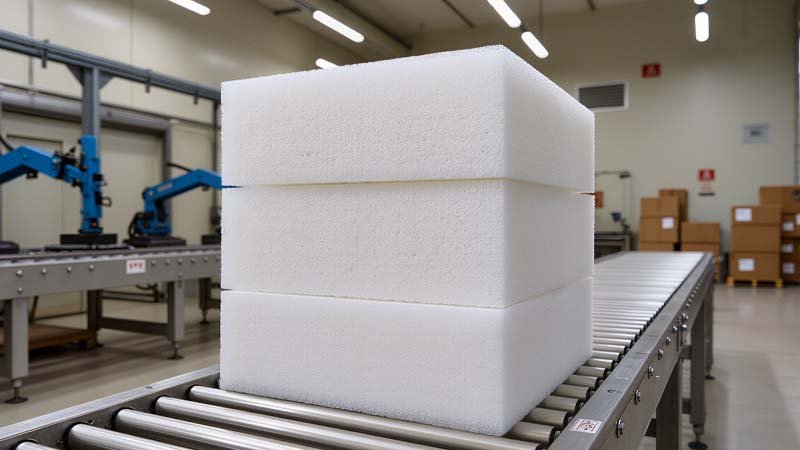
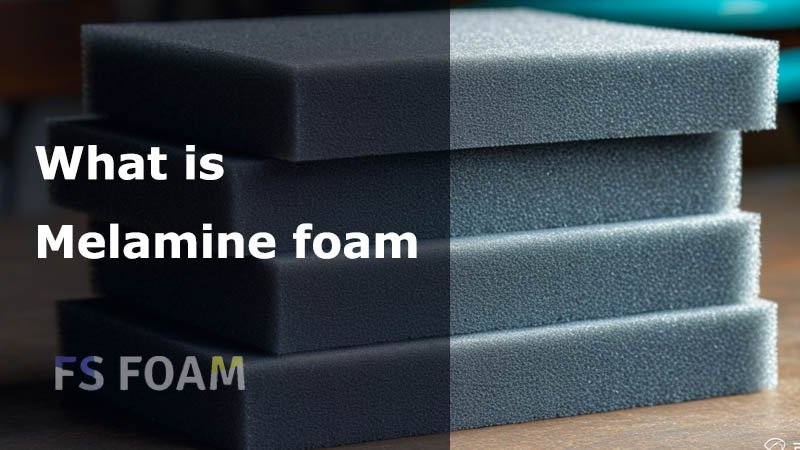
Before we started, let’s talk about what Melamine foam is. Well, melamine foam is an open-cell thermoset foam made from melamine-formaldehyde resin. When foamed and cured, this resin forms a three-dimensional network of microscopic, rigid-but-flexible cells. These cells give melamine foam its signature characteristics: featherweight density, flame resistance, sound absorption, and thermal stability.
We like to describe it as a hybrid material—part ceramic in behavior, part polymer in function. At the microscopic level, the polymer walls are hard, glass-like structures. Yet the foam remains soft in the hand and compressible in shape. This balance between rigidity and softness is what creates its acoustic, thermal, and cleaning abilities.
Unlike polyurethane or polyethylene foam, melamine foam cannot melt, cannot drip, and does not release toxic smoke. Instead, it chars, self-extinguishes, and generates minimal emissions in fire conditions—properties that come naturally from the nitrogen-rich melamine resin.
In other words, melamine foam isn’t simply a lightweight insulator; it is a scientifically engineered structure designed for environments where performance and safety truly matter.
Why is choosing the Right Melamine Foam important?
We often tell customers: melamine foam is not a one-size-fits-all material. Yes, it is lightweight. Yes, it is open-cell. Yes, it is inherently flame resistant. But each batch, each density, each thickness, each processed structure performs differently depending on where it is used.
A block of melamine foam designed for acoustic absorption in a concert hall is fundamentally different from the melamine foam engineered for aircraft duct insulation or the abrasive grade we compress for cleaning sponges. If we take a foam engineered for sound absorption and use it for high-temperature HVAC insulation, performance will fall short. If we use a soft foam grade for mechanical cleaning, it will shred too quickly.
Choosing the right foam is not about preference—it’s about matching the foam to your exact operational environment. When the match is right, melamine foam delivers extraordinary advantages:
- Exceptional fire safety without flame retardants
- High sound absorption
- Thermal insulation that performs reliably in both extreme heat and severe cold
- Incredible lightness
- Micro-abrasive cleaning ability
- Stability over wide temperature swings
- Non-toxic, fiber-free performance
So, when we ask, “Why is choosing the right melamine foam important?” the answer is simple: because melamine foam performs brilliantly only when selected correctly. Before you buy the melamine foam, you need to check the following base points.
What Is The Primary Application for Melamine Foam?
This question is the foundation of every successful selection decision. Because melamine foam behaves differently depending on its density, processing method, and composition, we always begin here.
Are You Using It for Cleaning?
For cleaning applications—melamine sponges or “magic erasers”—abrasiveness is the key factor. We use a specific density range and cell size that allows the foam to act like micro-sandpaper. When moistened, the foam’s rigid microscopic structure removes stains through gentle friction.
If you choose a foam that’s too soft, it will smear or collapse.
If you choose one that’s too dense, it won’t scrub effectively.
Is Your Goal Acoustic Absorption?
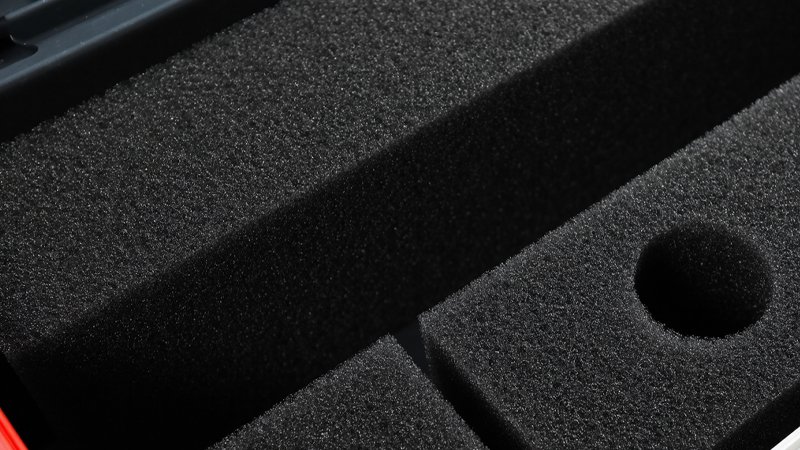
Melamine foam is a world-class acoustic material. For recording studios, home theaters, offices, vehicles, or industrial noise reduction, we select foam based on:
- Noise Reduction Coefficient (NRC)
- Cell size
- Thickness
- Airflow resistance
- Surface shape (flat, pyramid, wave, etc.)
Here, structure matters far more than appearance. The right acoustic foam can dramatically reduce echo, reverberation, and airborne noise.
Is Thermal Insulation the Priority?
Melamine foam thrives in extreme temperatures:
- Flexible at –200°C
- Stable up to +240°C
- Non-melting
- Non-dripping
- Non-flammable
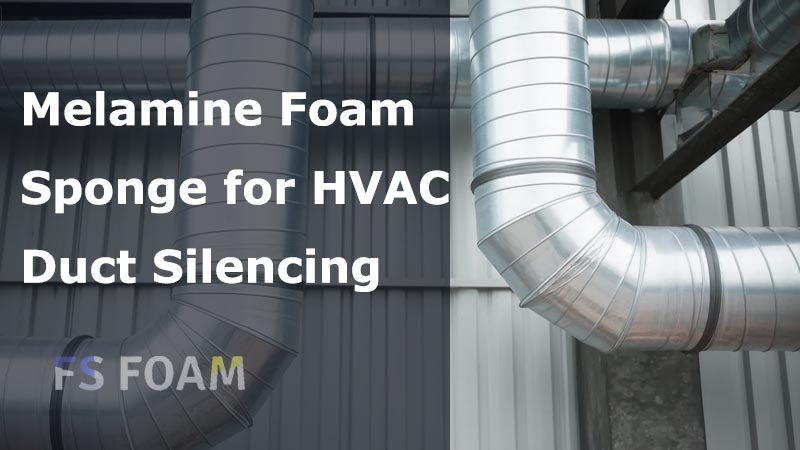
This makes it ideal for HVAC ducts, engine compartments, water tanks, solar heaters, industrial pipelines, and even cryogenic systems. But choosing the wrong density or thickness could mean heat loss or insufficient fire performance.
Do You Need Fire Protection Above All Else?
In trains, aircraft, public buildings, ships, and industrial settings, fire safety is non-negotiable. Melamine foam meets high global flame ratings, but not all grades are created equal. Some variations are engineered to pass stricter regional standards. Choosing the correct one ensures compliance and safety.
What Density and Cell Structure Should You Choose?
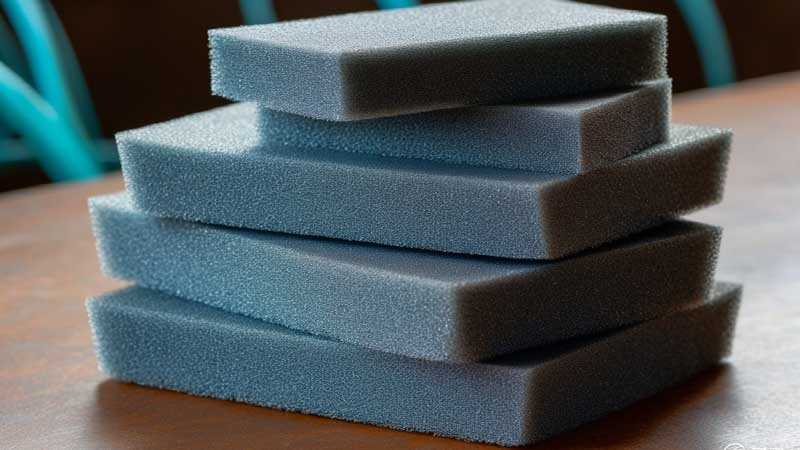
Density dramatically affects how melamine foam behaves. Its low density (around 7–9 kg/m³) makes it extremely lightweight and ideal for acoustic applications. Higher density offers increased mechanical strength, better durability, and improved cleanability.
We break density selection down into three considerations:
1. Mechanical Durability
If you need a foam that withstands repeated handling, pressing, or cleaning, slightly higher density ensures structural resilience. Cleaning sponges, for instance, require a grade that balances abrasiveness with durability.
2. Acoustic Performance
Lower density often allows better airflow resistance and sound absorption. But this depends on cell uniformity. Industrial acoustic panels might require a specific pore size that enhances mid- and high-frequency absorption.
3. Thermal and Structural Requirements
In insulation systems, especially in pipes and ducts, density ensures dimensional stability under vibration and heat. Too low a density may sag; too high a density may add unnecessary cost.
What Thickness Do You Need for Optimal Performance?
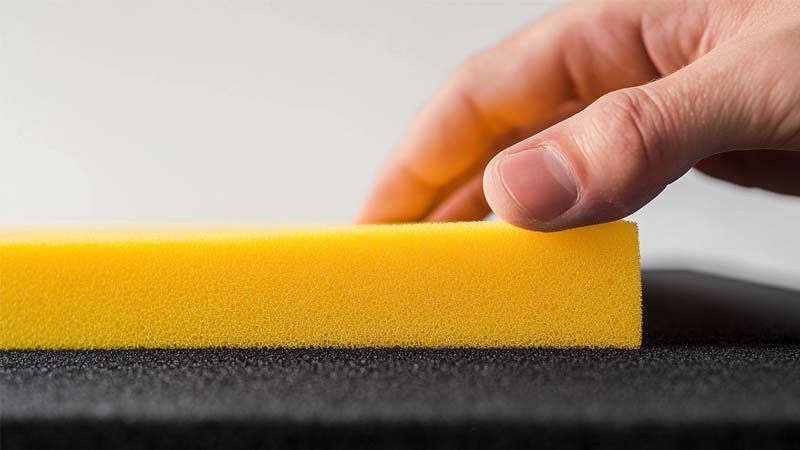
Thickness is a decisive factor in sound absorption, thermal insulation, and fire safety. We often guide customers through three questions:
1. What frequency range must you treat?
Thicker foam absorbs lower frequencies more effectively. For deep rumbling noises—engines, HVAC systems, industrial machinery—thicker foam is non-negotiable.
2. What temperature range will the foam face?
Higher temperatures demand a more robust material volume. Thin foam may not offer sufficient heat resistance or long-term structural stability.
3. What space constraints exist?
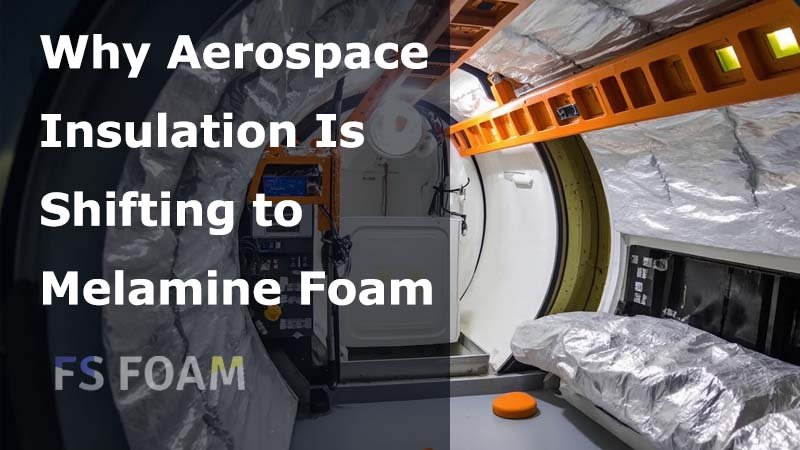
In aircraft or vehicles, every millimeter counts. Here, we balance thickness with high-performance lamination layers to achieve the best possible results without sacrificing space.
What Fire Ratings and Safety Certifications Should You Look For?
Because melamine foam is often used in regulated environments, certifications matter. They are more than labels—they determine where the foam can legally and safely be used.
Common fire standards include:
- DIN 4102 B1 (Germany)
- UL94-V0 (United States)
- EN 45545 (Railway applications)
- GB standards (China)
- FAR 25.853 (Aviation interiors)
We always ask customers: Where will the foam be used?
The safety requirements of a school auditorium differ from those of a high-speed rail cabin or engine room.
Choosing a foam with insufficient fire certification may not only be unsafe—it may be illegal.
What Environmental Conditions Must the Foam Withstand?
Environmental stresses shape material selection more than most customers expect.
Extreme Temperatures
If your environment swings between severe cold and intense heat, melamine foam is ideal—but only if graded correctly. Cryogenic systems use different formulations than high-heat engine housings.
Humidity and Moisture Exposure
Melamine foam is not inherently waterproof. In high-humidity areas, we may apply laminations or combine it with foil or fabric layers to enhance moisture resistance.
Chemical Exposure
Though melamine foam resists many organic solvents, strong acids and alkalis may degrade it. In chemical plants or industrial pipelines, we evaluate exposure severity before recommending a grade.
Do You Need Laminations, Coatings, or Composite Structures?
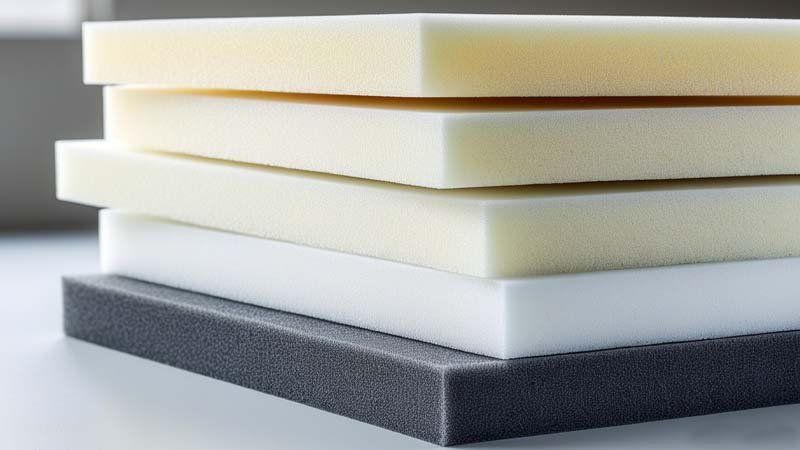
Many clients assume melamine foam is best used in its raw form. In reality, laminated and composite melamine foams often perform far better.
When Do Laminations Help?
- When moisture resistance is needed
- When mechanical protection is required
- When aesthetic surfacing is important
- When insulation efficiency must be boosted
We commonly laminate melamine foam with aluminum foil, fiberglass fabric, non-woven textiles, or pressure-sensitive adhesive (PSA).
When Are Composite Structures Necessary?
In automotive, aerospace, and architectural applications, raw foam alone may not provide enough durability. Composites improve:
- Structural strength
- Acoustic diffusion
- Impact resistance
- Heat reflection
- Mounting convenience
Composite melamine foam is often the backbone of interior vehicle panels, engine insulation, and HVAC duct liners.
Conclusion
Choosing melamine foam isn’t about selecting a block, a color, or a size. It’s about understanding your environment, your safety needs, your performance requirements, and your long-term expectations. After years of working with melamine foam across multiple industries, we can confidently say: the right selection transforms projects, solves problems, and elevates performance far beyond what traditional foams can achieve.
Whether you’re using melamine foam for acoustics, insulation, fire safety, cleaning, or industrial applications, the key is aligning foam characteristics with your actual conditions. When you choose correctly, melamine foam becomes an incredibly powerful material.
And we’re here to help you make that choice with clarity and confidence.
FAQ
1. Is melamine foam fireproof?
Melamine foam isn’t technically “fireproof,” but it is inherently flame resistant. It won’t melt, drip, or produce heavy smoke, and it self-extinguishes by charring. These properties allow it to meet strict fire ratings such as DIN 4102 B1 and UL94-V0 without any added flame retardants.
2. Can melamine foam be used outdoors?
Melamine foam can be used outdoors, but only when protected or laminated. UV, moisture, and wind can degrade the raw foam over time. When we add foil, fabric, or coatings, the foam becomes suitable for exterior acoustic panels, HVAC units, and industrial enclosures.
3. How long does melamine foam last?
Lifespan depends heavily on the application. In acoustic panels, melamine foam can last over 10 years. In high-temperature insulation systems, it remains stable for long periods. In cleaning applications, its micro-abrasive structure wears down faster by design.
4. What thickness is best for soundproofing?
For mid- and high-frequency sound absorption, 25–50 mm is common. For low-frequency control, thicker foam or composite structures perform better. The ideal thickness depends on room size, noise source, and required NRC rating.
5. Is melamine foam safe for people with allergies?
Yes. Melamine foam is fiber-free, doesn’t shed particles like glass wool, and contains no residual free formaldehyde. It’s suitable for homes, schools, hospitals, and enclosed public spaces where air quality and hygiene are a priority.